Embedded Fin Tube vs. Extruded Fin Tube: Which Design Is Better for Industrial Heat Exchangers?
Embedded Fin Tube vs. Extruded Fin Tube: Which Design Is Better for Industrial Heat Exchangers?
Choosing between an embedded fin tube and an extruded fin tube affects heat transfer performance, operating temperature, corrosion protection, and maintenance requirements. Both designs increase the external surface area of a tube, but their fin attachment methods create different advantages in industrial service.
For engineers comparing Embedded Fin Tube versus extruded fin design, the decision should start with operating temperature, atmospheric conditions, tube material, and expected service life. An Embedded Fin Tube for high temperature exchangers may be a better fit for demanding thermal conditions, while an extruded design can offer better protection when external corrosion is a major concern.
How Are Embedded and Extruded Fin Tubes Manufactured?
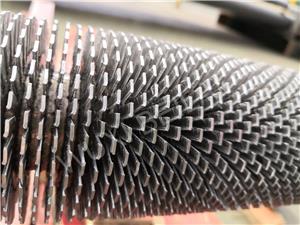
An embedded fin tube, also known as a G-fin tube, uses a mechanical locking process. A helical groove is formed on the outside surface of the base tube. A metal fin strip is placed into this groove, and the displaced tube material is pressed back around the fin root to secure it.
This construction creates a firm mechanical connection between the fin and the base tube. It is one reason an Embedded Fin Tube for high temperature exchangers is commonly considered for equipment exposed to elevated temperatures and repeated thermal cycles.
An extruded fin tube is manufactured differently. In a common bimetallic design, an outer aluminum sleeve is fitted over an inner base tube. The sleeve is then processed to form fins along its surface. The resulting structure provides an integrated fin-and-sleeve construction, while the inner tube can be selected according to the process fluid and pressure requirements.
When evaluating Embedded Fin Tube versus extruded fin design, engineers should therefore consider more than the appearance of the fins. The manufacturing method determines how the fin connects to the tube and how much of the base tube is covered.
Which Design Performs Better at High Operating Temperatures?
Operating temperature is one of the most important factors in finned-tube selection. High temperatures and repeated heating and cooling can affect the connection between the fin and the base tube. A fin that loosens or loses effective thermal contact can reduce heat transfer performance.
The mechanically locked construction makes an Embedded Fin Tube for high temperature exchangers suitable for applications where fin retention under thermal stress is important. The design is commonly used in steam coils, air preheaters, and air-cooled heat exchangers.
For projects involving frequent temperature changes, an Embedded Fin Tube for high temperature exchangers can provide a practical solution because the fin is secured inside the tube groove rather than relying only on an external sleeve interface.
However, an extruded fin tube should not automatically be considered unsuitable for elevated temperatures. Its actual operating limit depends on the sleeve material, base tube, construction, and service conditions. The correct comparison of Embedded Fin Tube versus extruded fin design requires checking the manufacturer's rated temperature for the complete tube assembly.
For demanding thermal duties, an Embedded Fin Tube for high temperature exchangers may be preferable when its material combination and design temperature match the project requirements.
Which Design Offers Better Corrosion Protection?
Corrosion conditions can change the selection considerably. An embedded fin tube has a mechanically secured fin, but the base tube remains more exposed to the surrounding atmosphere. The groove and exposed tube surface should therefore be considered when evaluating external corrosion risks.
An Embedded Fin Tube in corrosive environments may still be suitable when the base tube material is selected to resist the actual process or atmospheric conditions. Stainless steel or other corrosion-resistant materials may be considered according to the fluid composition, temperature, and corrosion mechanism.
However, an Embedded Fin Tube in corrosive environments does not provide the same degree of external tube coverage as a typical bimetallic extruded fin tube. This difference matters in coastal locations, humid plants, and installations exposed to corrosive air.
The outer sleeve of an extruded fin tube can cover much of the base tube surface, helping reduce direct exposure to atmospheric corrosion. This makes extruded construction worth considering when external protection is a major design priority.
When assessing an Embedded Fin Tube in corrosive environments, engineers should distinguish between internal and external corrosion. The base tube must withstand the tube-side medium, while the fin and exposed surfaces must suit the air-side environment. An Embedded Fin Tube in corrosive environments should never be selected based on fin attachment alone.
The choice between an Embedded Fin Tube versus extruded fin design ultimately depends on which corrosion mechanism presents the greater risk and how the complete material combination performs under actual operating conditions.
What Should Engineers Consider Before Selecting a Design?
There is no single finned-tube design that suits every heat exchanger. Before deciding on an Embedded Fin Tube versus extruded fin design, engineering and procurement teams should review several project factors:
Operating temperature: Confirm normal, maximum, and transient tube-wall temperatures. An Embedded Fin Tube for high temperature exchangers should be checked against the specified continuous and peak operating conditions.
Corrosion exposure: Identify whether the main risk comes from the tube-side fluid, external atmosphere, moisture, or chemical deposits. An Embedded Fin Tube in corrosive environments requires suitable base tube and fin materials.
Thermal cycling: Consider how frequently the equipment starts, stops, heats, and cools. An Embedded Fin Tube for high temperature exchangers can be useful where a secure mechanical fin connection is required.
Tube wall requirements: The embedded process forms a groove in the base tube, so wall thickness and pressure-design calculations must account for the manufacturing method.
Maintenance conditions: Consider cleaning methods, accessibility, fouling, and the consequences of corrosion or fin damage over the expected service life.
A complete review of Embedded Fin Tube versus extruded fin design should also include fin height, fin pitch, tube diameter, material compatibility, and heat-transfer requirements. These details influence the overall performance of the heat exchanger and should be confirmed before production.
How Does BEILAI Support Embedded Fin Tube Selection?
At BEILAI, we supply embedded fin tubes for industrial heat-transfer applications and support material selection according to project requirements. Our product configurations include base tube materials such as carbon steel, stainless steel, alloy steel, and copper, with fin material options including aluminum, copper, and steel.
Depending on the required configuration, our embedded fin tube products can be manufactured to relevant standards such as ASTM A192/A192M, ASTM A210/A210M, and ASTM A213 TP316/TP316L. The appropriate material and specification should be confirmed against the project's operating conditions and technical requirements.
For buyers comparing Embedded Fin Tube versus extruded fin design, we recommend evaluating the complete operating environment rather than choosing by fin type alone. Our team can discuss tube materials, fin materials, dimensions, and application requirements to help identify a suitable configuration.
If your project needs an Embedded Fin Tube for high temperature exchangers or requires a material review for an Embedded Fin Tube in corrosive environments, contact BEILAI with your technical specifications. Visit our website to learn more about our products and get in touch with us about your heat exchanger requirements.