Finned Tube Solutions That Deliver Stable Heat Transfer in Real Projects
Finned Tube Solutions That Deliver Stable Heat Transfer in Real Projects
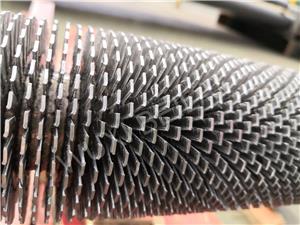
When people talk about heat exchange equipment, they often focus on systems, not components. But in real projects, performance usually comes down to one critical detail: the finned tube. At BEILAI, we work with customers who care less about buzzwords and more about long-term stability, predictable output, and materials that behave well under pressure. That is exactly where a well-designed finned tube proves its value.
From refineries to power plants, engineers choose a finned tube because it increases heat transfer efficiency without forcing a larger footprint. Over years of production and field feedback, BEILAI has seen how the right finned tube design makes daily operation easier, not harder.
Application Scenarios Where Finned Tube Performance Really Matters
In oil refining, petrochemical processing, and thermal power generation, heat exchange never stops. Operators rely on a finned tube to handle continuous thermal cycles while maintaining stable output. Many customers tell us the same thing: they want consistent performance, not constant adjustment.
A finned tube becomes especially valuable in environments that demand long term refinery heat exchange stability. Whether the system handles high-temperature flue gas or process fluids, the fin structure improves surface area while keeping flow resistance under control. In real installations, this balance supports long term refinery heat exchange stability day after day.
Common Pain Points Engineers Face with Heat Transfer Tubes
Before choosing a finned tube, buyers usually come with concerns. They worry about fouling, uneven expansion, or fins separating after long operation. These are valid issues, especially when equipment runs for years without shutdown.
Another frequent concern involves reliable heat transfer under high temperature conditions. If the tube material lacks strength or consistency, performance drops fast. A poorly designed finned tube may look fine on paper but fail to deliver reliable heat transfer under high temperature in real service.
At BEILAI, we design every finned tube to support reliable heat transfer under high temperature, not just during testing but throughout long operating cycles.
How to Choose the Right Finned Tube Design
Selecting a finned tube is not about picking the thickest wall or the tallest fin. Engineers should start with operating temperature, pressure range, and heat load. These factors define whether solid fins, embedded fins, or welded fins make sense.
Material choice also matters. Alloy steel options support energy efficient industrial heat systems by maintaining strength at elevated temperatures. When paired with precise fin spacing, a finned tube contributes directly to energy efficient industrial heat systems without adding complexity.
From our experience, projects that focus early on energy efficient industrial heat systems achieve better lifecycle cost control and fewer shutdowns.
Parameter Recommendations from Practical Experience
Customers often ask what parameters actually matter for a finned tube. In our projects, fin height, fin pitch, and tube diameter influence performance more than extreme material upgrades.
A properly engineered finned tube supports long term refinery heat exchange stability when fin bonding remains consistent and thermal expansion stays predictable. Wall thickness should match pressure requirements, not exceed them unnecessarily.
When parameters align with real operating data, the finned tube delivers reliable heat transfer under high temperature and supports energy efficient industrial heat systems over years, not months.
Questions Buyers Commonly Ask Before Ordering
Many buyers ask whether a finned tube requires special maintenance. In most cases, standard inspection routines are enough when the tube supports long term refinery heat exchange stability by design.
Another question involves operating cost. A well-designed finned tube reduces energy loss, which directly benefits energy efficient industrial heat systems. Customers notice lower fuel consumption over time.
Some also worry about heat fluctuation. With proper fin attachment, a finned tube maintains reliable heat transfer under high temperature, even during load changes.
Common Mistakes That Reduce Finned Tube Service Life
One common mistake is choosing a finned tube solely based on price. Low initial cost often sacrifices reliable heat transfer under high temperature, leading to early replacement.
Another issue comes from ignoring system context. A finned tube must match the overall design to support energy efficient industrial heat systems. Oversized fins or mismatched materials disrupt flow and reduce stability.
Projects that overlook long term refinery heat exchange stability often face unplanned downtime.
Conclusion: Why BEILAI Finned Tubes Earn Trust Over Time
A finned tube should solve problems, not create them. At BEILAI, we focus on materials, process control, and application knowledge built through decades of industrial supply. Our finned tube solutions support long term refinery heat exchange stability, deliver reliable heat transfer under high temperature, and contribute to energy efficient industrial heat systems in real operating environments.
When customers choose BEILAI, they choose experience that shows up in daily operation.