How Finned Tube Supports Reliable Heat Recovery in Modern Power Plants
How Finned Tube Supports Reliable Heat Recovery in Modern Power Plants
In many modern power plants, operators devote enormous attention to improving the efficiency of their heat recovery units. While these systems contain various components, one element repeatedly proves essential: the finned tube. When engineered with the right materials, geometry, and manufacturing processes, a finned tube quietly but reliably drives higher efficiency and more stable output across the entire plant. At BEILAI, we have seen how the integration of high-efficiency finned tube technology changes the daily performance of power stations, especially those aiming for long-term operational stability and lower fuel consumption.
Why Finned Tubes Matter in Heat Recovery
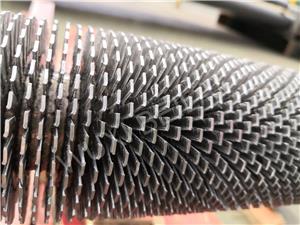
The finned tube has a deceptively simple role—maximize heat transfer between gas and fluid streams. But when incorporated into a power plant heat recovery finned tube system, its influence becomes far more significant. Exhaust gas temperatures, efficiency of heat capture, boiler load stability, and even maintenance cycles are all affected by the performance of the finned tube.
Power plants often operate under demanding thermal conditions, and reliable components are essential. That is why many engineers rely on durable finned tube for thermal performance solutions, particularly those that maintain structural integrity despite long exposure to high temperatures and rapid temperature fluctuations. Ensuring durability is not only about safety—it directly shapes how efficiently heat is reclaimed during daily operation.
The Advantage of High-Efficiency Finned Tube Technology
As energy demands grow, so does the need for optimized heat transfer. BEILAI's experience supplying critical tubing for industrial customers reinforces how essential high-efficiency finned tube technology has become in the heat recovery conversation. This technology provides improved heat transfer coefficients, better airflow management, and more predictable thermal behavior compared with older styles of tubes.
Inside a functioning power plant heat recovery finned tube system, small gains compound quickly. A reduction in gas outlet temperature, even by a small margin, enhances steam generation efficiency and reduces the load on primary boilers. These gains wouldn't be possible without the contribution of high-efficiency finned tube technology, which appears throughout the system and quietly stabilizes thermal exchange in every operational cycle.
Durability: A Critical Factor for Power Plants
Power plants are notorious for harsh operating environments—high temperatures, corrosive gases, and continuous running hours. In such a context, the strength and resilience of a finned tube are not merely technical specifications; they affect reliability, downtime, and long-term cost. This is where the value of a durable finned tube for thermal performance becomes especially clear.
Every durable finned tube for thermal performance installed in a heat recovery unit must withstand long periods of thermal shock and high-velocity gas streams. A single failure could disrupt the entire line, reducing steam output and forcing unplanned shutdowns. For this reason, BEILAI works with materials and manufacturing techniques that reinforce structural stability and prolong service life. The presence of a durable finned tube for thermal performance in a heat recovery system makes operators more confident, especially during peak load periods.
Integration Into Power Plant Heat Recovery Systems
In most power facilities—coal-fired, gas-fired, biomass, or waste-to-energy—the power plant heat recovery finned tube system serves as a bridge between wasted thermal energy and useful steam production. Within economizers, air preheaters, and HRSG units, the finned tube ensures effective energy utilization.
What BEILAI observes across projects worldwide is consistent: a well-designed power plant heat recovery finned tube system dramatically reduces operating costs by lowering fuel consumption and improving heat balance. Much of this advantage stems from the adoption of high-efficiency finned tube technology, which ensures improved thermal contact and smoother energy transfer through each stage of the recovery cycle.
BEILAI's Perspective on Finned Tube Development
As a manufacturer deeply involved in producing seamless tubes and thermal components, BEILAI understands that each finned tube used in a power plant must satisfy long-term performance expectations. Whether the system calls for enhanced corrosion resistance, thicker fins, or specialized metallurgy, our goal is to support customers with solutions grounded in durability and measurable performance.
Because the power plant heat recovery finned tube system works continuously under thermal stress, the expectations for reliability are high. That is why the demand for durable finned tube for thermal performance grows year after year. Operators want equipment that will perform consistently through seasonal changes, fuel variations, and load adjustments. This is also why high-efficiency finned tube technology continues to evolve—it helps plants meet increasing efficiency targets without adding complexity or risk.
Long-Term Value and Operational Stability
A power plant is a long-term investment, and its heat recovery equipment must contribute to financial and operational goals. The finned tube plays a central role in this equation by enabling more efficient heat extraction and more stable boiler operation.
Across many installations, a well-engineered power plant heat recovery finned tube system has shown measurable improvements in fuel efficiency and output stability. The widespread adoption of high-efficiency finned tube technology helps maintain smooth flow dynamics, while the presence of a durable finned tube for thermal performance reduces replacement costs and downtime.
When all these elements come together, power plants experience not only improved thermal performance but also a longer lifespan for their major equipment—and this is where BEILAI's expertise continues to add value.