Finned Tube Heat Exchanger Solutions Guide
Introduction
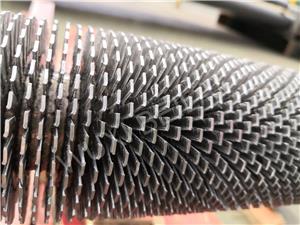
A finned tube increases heat transfer area by adding extended surfaces to a base tube. This simple structural enhancement dramatically improves thermal efficiency without expanding equipment size. In power plants, petrochemical facilities, waste heat recovery systems, and air coolers, finned tubes play a critical role in maintaining stable thermal performance.
At BEILAI, we manufacture finned tube products using controlled welding, precision forming, and strict inspection processes. Our experience in seamless tubes, alloy materials, and industrial fabrication allows us to deliver reliable finned tube heat exchanger solutions for demanding operating environments.
Application Scenarios: Where Finned Tubes Make a Difference
Engineers install spiral finned tubes for heat exchangers in air coolers, economizers, and condensers where surface area determines performance. By increasing external contact area, these designs act as high efficiency heat transfer tubes, especially in gas-to-air applications.
Waste heat recovery systems rely on finned tube heat exchanger solutions to improve energy utilization. Instead of expanding equipment footprint, operators use spiral finned tubes for heat exchangers to achieve better thermal exchange within limited space.
In boiler systems and industrial furnaces, properly designed high efficiency heat transfer tubes help stabilize temperature and reduce energy consumption. When performance consistency matters, engineered finned tube heat exchanger solutions provide measurable improvement.
Pain Points: What Buyers Often Worry About
Many customers worry about welding reliability. Poor bonding between fin and base tube reduces thermal efficiency. High-quality spiral finned tubes for heat exchangers require precise welding control to maintain contact integrity.
Another concern involves corrosion and scaling. In harsh environments, improperly selected materials reduce lifespan. Durable high efficiency heat transfer tubes must balance thermal conductivity with corrosion resistance.
Space limitation also creates design pressure. Plants cannot always enlarge heat exchangers. Well-designed finned tube heat exchanger solutions address this challenge by increasing surface area without increasing shell size.
Selection Criteria: How to Choose the Right Finned Tube
Material selection comes first. Carbon steel works for moderate environments, while alloy or stainless steel improves corrosion resistance. Many industrial operators prefer customized finned tube heat exchanger solutions that match exact operating temperature and fluid characteristics.
Fin structure affects airflow and heat dissipation. Spiral finned tubes for heat exchangers improve turbulence and enhance convective transfer. Engineers often select this design when aiming for stable performance under variable load.
Thermal efficiency calculations should justify the investment. Properly engineered high efficiency heat transfer tubes demonstrate measurable improvement in overall heat transfer coefficient.
Manufacturing precision also matters. At BEILAI, we control fin height, pitch, and welding stability to ensure consistent spiral finned tubes for heat exchangers quality across production batches.
Parameter Recommendations from Manufacturing Practice
Fin height and spacing influence performance directly. Excessively dense fins may trap debris, while overly wide spacing reduces efficiency. Balanced design improves durability in high efficiency heat transfer tubes.
Welding method determines long-term stability. Controlled production strengthens the mechanical bond in finned tube heat exchanger solutions and prevents fin loosening during operation.
Wall thickness must align with pressure requirements. While fins improve thermal performance, the base tube still carries internal pressure. Reliable spiral finned tubes for heat exchangers require accurate dimensional tolerance.
Surface treatment may extend service life in corrosive environments. When properly engineered, high efficiency heat transfer tubes maintain stable output over extended cycles.
Questions Buyers Frequently Ask
Why not simply increase tube length instead of adding fins?
Because finned tube heat exchanger solutions improve heat transfer without increasing equipment size.
Do spiral fins perform better than straight fins?
In many airflow applications, spiral finned tubes for heat exchangers enhance turbulence and improve exchange efficiency.
Is efficiency improvement measurable?
Yes. Properly designed high efficiency heat transfer tubes significantly raise overall heat transfer coefficients.
Does welding quality affect lifespan?
Absolutely. Strong bonding ensures durable finned tube heat exchanger solutions.
Common Mistakes in Procurement
Some buyers focus only on initial price. However, poorly manufactured spiral finned tubes for heat exchangers often reduce long-term efficiency.
Others overlook airflow calculation. Installing underspecified high efficiency heat transfer tubes limits expected gains.
Another mistake involves ignoring application temperature. Effective finned tube heat exchanger solutions require accurate material and structural matching.
Conclusion
Finned tubes remain one of the most practical ways to improve thermal performance without expanding system size. Well-designed spiral finned tubes for heat exchangers enhance airflow interaction and increase surface area. Reliable high efficiency heat transfer tubes support energy savings and operational stability. Professionally engineered finned tube heat exchanger solutions help industrial operators achieve higher efficiency with controlled investment.
At BEILAI, we combine tube manufacturing expertise, welding precision, and strict inspection to deliver finned tube systems built for real industrial conditions.