Why Finned Tube Matters in Industrial Heat Exchanger Design
Why Finned Tube Matters in Industrial Heat Exchanger Design
Introduction
In many industrial projects, improving heat transfer doesn’t always require bigger equipment. More often, it comes down to choosing the right finned tube. At BEILAI, we’ve worked with clients across power, petrochemical, and manufacturing sectors, and one thing stays consistent: a properly designed finned tube can noticeably improve system efficiency without increasing footprint. That’s why our focus stays on delivering reliable high efficiency heat transfer tubes, durable external fin heat transfer tubes, and application-ready industrial heat exchanger tubes.
Application Scenarios: Where a Finned Tube Makes the Difference
If you’ve worked with heat exchangers before, you know how quickly performance can drop when heat transfer is limited. This is exactly where a finned tube becomes essential.
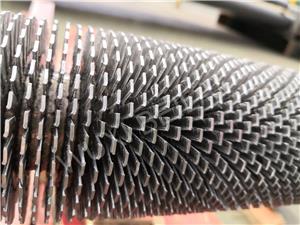
In air cooling systems, a finned tube increases the contact area between air and the tube surface, allowing faster heat dissipation. Many users switch to external fin heat transfer tubes when standard tubes can no longer meet cooling demand. In energy recovery systems, a finned tube helps capture more usable heat, making high efficiency heat transfer tubes a practical upgrade.
We also see industrial heat exchanger tubes widely used in compressors, boilers, and chemical processing units. In these scenarios, each finned tube contributes directly to stable operation and energy savings. Simply put, when performance matters, a finned tube is no longer optional.
Pain Points Users Often Encounter
From a buyer’s perspective, several issues tend to come up when selecting a finned tube.
Low efficiency with plain tubes
Many systems still rely on smooth tubes, which limits heat transfer. Replacing them with a finned tube significantly improves performance. This is why high efficiency heat transfer tubes are often the first upgrade engineers consider.
Durability concerns
Not every finned tube performs well under harsh conditions. Poor material selection leads to early failure. High-quality industrial heat exchanger tubes must handle corrosion, temperature variation, and mechanical stress.
Lack of proper fit
A standard finned tube may not match your system layout. That’s why many projects require customized external fin heat transfer tubes to achieve the best results.
How to Choose the Right Finned Tube
Material Selection
Choosing the right material directly affects how long your finned tube will last. Carbon steel works for general conditions, while stainless steel suits more demanding environments.
In real applications, we recommend aligning material choice with operating conditions. Reliable industrial heat exchanger tubes should maintain performance over time, not just in initial operation.
Fin Design and Structure
The design of a finned tube determines how effectively it transfers heat. Spiral designs are widely used because they balance airflow and heat exchange. For more demanding applications, welded external fin heat transfer tubes offer better structural strength.
A well-designed finned tube improves the performance of high efficiency heat transfer tubes without creating unnecessary resistance in airflow or fluid movement.
Practical Parameter Suggestions
When selecting a finned tube, a few practical parameters make a real difference.
Tube dimensions
The size of each finned tube should match system requirements. Oversizing doesn’t always improve efficiency, especially in compact setups using industrial heat exchanger tubes.
Fin height and spacing
Higher fins increase surface area, but excessive density can reduce airflow. A balanced finned tube design ensures that high efficiency heat transfer tubes perform consistently.
Material grade
A reliable finned tube must match the working environment. Well-designed external fin heat transfer tubes maintain stable performance even under temperature fluctuations.
Common Mistakes to Avoid
Even experienced buyers sometimes misjudge how to select a finned tube.
Choosing based only on price
A low-cost finned tube may seem attractive, but poor durability increases long-term costs. High-quality industrial heat exchanger tubes offer better value over time.
Ignoring real operating conditions
A finned tube that works in theory may fail in practice. Always ensure your external fin heat transfer tubes match actual working conditions.
Overcomplicating fin design
Adding too many fins to a finned tube can reduce airflow. Even high efficiency heat transfer tubes need balanced design to perform well.
Conclusion
From practical experience, upgrading to the right finned tube often delivers immediate improvements. At BEILAI, we focus on producing dependable industrial heat exchanger tubes, optimized external fin heat transfer tubes, and proven high efficiency heat transfer tubes that perform under real conditions.
A well-designed finned tube improves efficiency, extends service life, and reduces operating costs. Whether you’re upgrading existing equipment or designing a new system, choosing the right finned tube is one of the most effective decisions you can make.