5 Key Factors to Consider When Selecting Welded Fin Tubes
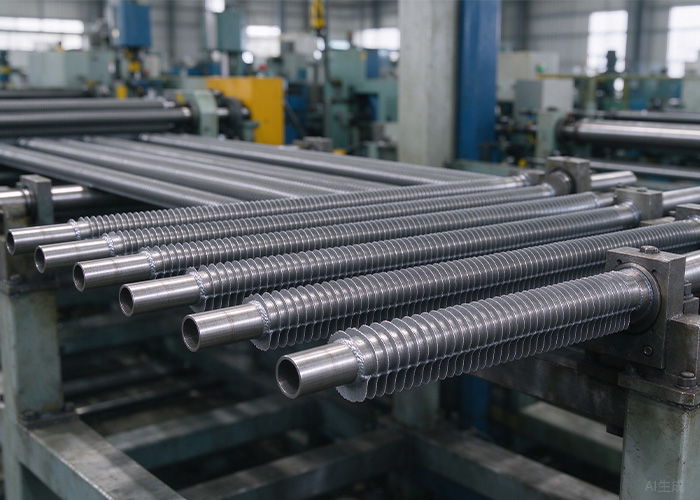
5 Key Factors to Consider When Selecting Welded Fin Tubes
Choosing welded fin tubes for an industrial heat-transfer system involves more than selecting a tube with a large surface area. The right design must match process temperature, fluid conditions, heat duty, mechanical loads, and maintenance requirements. A poor match can increase pressure drop, accelerate fouling, or shorten equipment life.
For boiler manufacturers, EPC contractors, power plants, refineries, and heat exchanger manufacturers, the goal is to achieve reliable heat transfer without adding unnecessary operating costs. Before requesting quotations, buyers should define the service conditions and compare fin geometry, attachment quality, materials, and supplier quality controls. Selecting welded fin tubes based on these factors helps align equipment performance with project requirements.
1. How Do Operating Conditions Affect the Selection of Welded Fin Tubes?
Start with the heat-transfer duty and the conditions on both sides of the exchanger. Record inlet and outlet temperatures, operating pressure, flow rate, fluid composition, and expected load variations. These values help engineers determine the required surface area and assess whether the design can meet performance targets.
The choice of welded fin tubes also depends on the gas or liquid passing across the finned surface. Gas-side heat transfer is often the limiting factor in gas-to-liquid applications, which is why extended surfaces can improve heat transfer without greatly increasing equipment size.
However, more surface area does not automatically mean better overall performance. Fin spacing and height affect pressure drop, fouling, and cleaning access.
Review these conditions before specifying a design:
Temperature: Check normal and maximum design temperatures, including startup and shutdown cycles.
Pressure: Confirm design pressure, tube wall thickness, and applicable construction requirements.
Flow rate: Assess velocity and pressure drop on both sides of the exchanger.
Fluid chemistry: Identify corrosive components, moisture, particulates, and potential deposits.
Heat duty: Define the required heat-transfer rate and acceptable operating range.
A finned tube heat exchanger should be evaluated as a complete thermal and mechanical system. Fin geometry cannot compensate for inaccurate process data or an undersized exchanger.
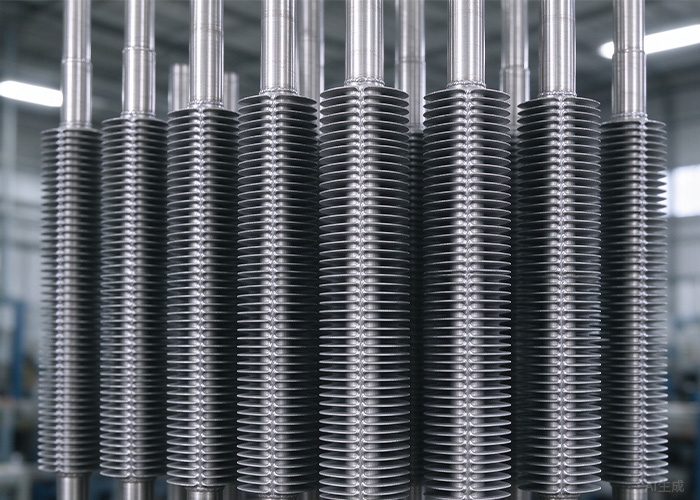
2. Which Fin Geometry and Welding Method Best Suit Your Application?
Fin shape affects heat-transfer area, flow resistance, mechanical strength, and resistance to deposits. The best configuration depends on whether the application prioritizes thermal performance, durability, compactness, or cleaning access.
Compare common fin configurations
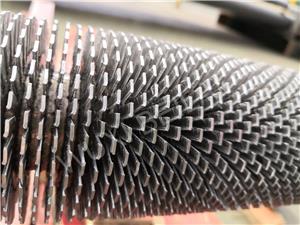
A high frequency welded fin tube uses a continuous fin attached to the tube through a high-frequency welding process. This method creates a metallurgical bond and is commonly used when reliable fin attachment and efficient heat transfer are important. Buyers should verify weld continuity, fin dimensions, and inspection requirements.
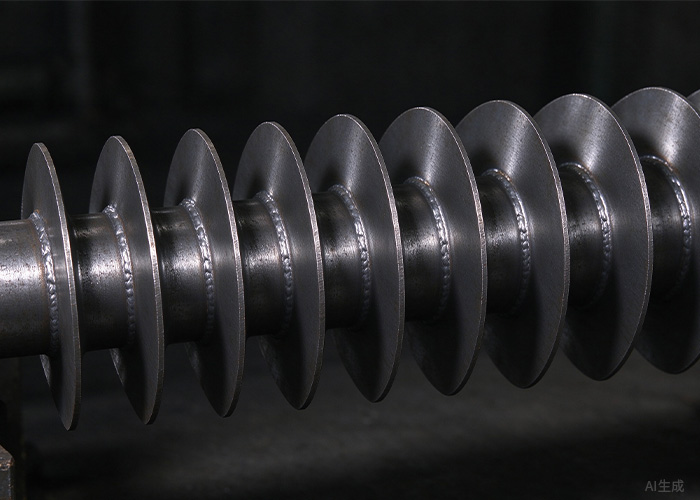
A welded helical fin tube has a spiral fin wrapped around the tube. Its geometry provides extended surface area and is used in industrial heat exchangers and boiler-related systems. Confirm fin height, thickness, pitch, and tube dimensions against the thermal design.
A serrated fin tube has interruptions or notches along the fin edge. This configuration can promote turbulence in selected gas-side applications. However, its geometry must be assessed for fouling, pressure drop, cleaning access, and mechanical durability.
When comparing configurations, ask engineers to evaluate:
Fin height, thickness, pitch, and surface-area ratio
Tube outside diameter and wall thickness
Expected pressure drop and flow distribution
Resistance to vibration and mechanical damage
Cleaning access and the likelihood of deposit buildup
The attachment method matters as much as the fin shape. A consistent bond supports heat transfer between the tube and fin, while weak or irregular attachment can increase thermal resistance and create reliability concerns.
For demanding service, compare the manufacturing consistency of a high frequency welded fin tube with the project's required dimensions and quality criteria rather than choosing by product name alone.
3. How Should Tube and Fin Materials Match Temperature and Corrosion Risks?
Material selection should reflect both the tube-side fluid and the environment around the fins. Carbon steel may suit some services, while stainless steel or other alloys may be needed when corrosion, temperature, or process chemistry demands greater resistance.
For finned tubes for boilers, buyers should confirm the tube material, operating temperature, pressure, and applicable boiler or pressure-equipment standards. Flue-gas composition, moisture, ash, and operating cycles can influence corrosion and deposit formation. In combustion and waste-heat recovery systems, cold-end conditions may also increase the risk of low-temperature corrosion.
Consider these questions before approving the materials:
Is the tube exposed to corrosive chemicals, moisture, salt, or combustion products?
Could deposits accumulate between fins and restrict airflow?
Will the equipment experience repeated thermal cycling?
Are the tube and fin materials compatible with the specified welding process?
Are special coatings, inspections, or cleaning procedures necessary?
Material compatibility matters at the joint as well as across the base metals. Ask suppliers to identify tube and fin materials, manufacturing procedures, and any limitations relevant to the intended environment.
A serrated fin tube may suit certain gas-side duties, but fin geometry alone cannot resolve corrosion or fouling problems. Material choice and maintenance planning remain essential.
4. What Quality Checks Should Buyers Require Before Approving a Supplier?
Product descriptions alone cannot establish suitability. Procurement teams should define acceptance criteria before ordering and verify that the supplier can provide traceable materials, repeatable manufacturing, and appropriate inspection records.
For welded fin tubes, quality checks may include:
Dimensional inspection: Verify tube diameter, wall thickness, fin height, fin thickness, pitch, and overall length.
Weld inspection: Define checks for fin attachment and weld continuity according to the agreed specification.
Material verification: Review material certificates and traceability records for tube and fin materials.
Testing requirements: Specify applicable pressure tests, nondestructive examination, and other checks required by the design.
Visual condition: Check for damaged fins, irregular spacing, distortion, corrosion, or handling damage.
Documentation: Confirm inspection reports, material test certificates, marking, packaging, and delivery records.
Requirements vary by application, standard, and purchase specification. Do not assume that every product requires identical tests. Agree on the inspection plan with the engineering and quality teams before production.
When assessing a welded helical fin tube, for example, buyers should verify that the supplied pitch, fin dimensions, and attachment quality match the approved drawings. The same principle applies to every configuration: acceptance criteria should be measurable and documented.
5. How Can Buyers Balance Heat Transfer, Maintenance, and Total Cost?
The lowest initial price may not deliver the lowest lifetime cost. A design with high heat-transfer performance may also create excessive pressure drop or be difficult to clean. A more robust configuration may be more economical over time if it reduces maintenance and unplanned downtime.
When evaluating a finned tube heat exchanger, consider energy consumption, cleaning frequency, spare parts, inspection, and the consequences of unexpected shutdowns.
Use this checklist to compare supplier offers:
Confirm that the proposed design meets the required heat duty.
Compare pressure-drop estimates and operating conditions.
Review cleaning access and expected fouling behavior.
Check delivery lead time, manufacturing capacity, and traceability.
Evaluate warranty terms and technical support.
Compare lifecycle cost rather than purchase price alone.
For boiler projects, finned tubes for boilers should be evaluated against the specified operating conditions and maintenance plan, not selected solely on surface area or unit price.
BEILAI can be considered as a potential source for industrial welded fin tubes. Buyers should confirm available configurations, tube and fin materials, dimensional limits, welding quality controls, inspection scope, and documentation against the project specification. Providing clear operating data and drawings at the quotation stage helps align the proposal with the intended service.
Frequently Asked Questions
What are welded fin tubes used for?
They increase the heat-transfer surface area of tubes and are used in industrial heat exchangers, boilers, and waste-heat recovery equipment where extended surfaces can improve heat transfer.
When should buyers choose a high frequency welded fin tube?
Consider this design when the project requires a continuous fin-to-tube bond and the supplier can meet the specified geometry, material, and inspection criteria. The final choice depends on service conditions and project requirements.
What is the difference between a welded helical fin tube and a serrated fin tube?
A helical fin follows a continuous spiral around the tube, while a serrated fin has interruptions along its edge. These differences can affect flow behavior, pressure drop, and fouling. Selection depends on thermal performance and maintenance requirements.
Are finned tubes for boilers suitable for every boiler application?
No. Material, fin design, temperature, pressure, flue-gas chemistry, and applicable standards must be checked for the specific boiler duty.