Heat Exchanger Fin Tube Solutions for Efficient Thermal Systems
Heat Exchanger Fin Tube Solutions for Efficient Thermal Systems
Introduction
In many industrial systems, heat transfer efficiency directly affects operating cost, equipment lifespan, and production stability. When heat cannot move fast enough, systems lose energy and reliability. This is where a Heat Exchanger Fin Tube becomes essential. At BEILAI, we have worked with Heat Exchanger Fin Tube products across power generation, petrochemical, and process industries for years. Based on real project feedback, a well-designed Finned Tube Heat Exchanger often delivers measurable gains in industrial heat transfer efficiency improvement and supports long-term system reliability through high performance finned tube design.
Application Scenarios: Where Fin Tubes Matter Most
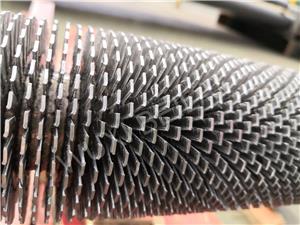
A Heat Exchanger Fin Tube usually appears in systems where space is limited but heat load remains high. Power plants rely on a Heat Exchanger Fin Tube inside boilers, economizers, and air coolers to boost industrial heat transfer efficiency improvement. Refineries also use a Heat Exchanger Fin Tube to stabilize process temperatures without expanding exchanger size.
In air-cooled systems, engineers often prefer a Heat Exchanger Fin Tube because fins increase surface area without adding excessive weight. This advantage supports high performance finned tube design, especially when airflow limits heat removal. In these environments, stable performance matters more than theoretical efficiency numbers.
Pain Points: What Buyers Actually Care About
From a buyer's perspective, the first concern involves performance consistency. Will this Heat Exchanger Fin Tube deliver predictable industrial heat transfer efficiency improvement after years of service? The second concern involves durability. Many customers ask whether a high performance finned tube design can resist vibration, corrosion, and thermal cycling.
Maintenance also matters. Buyers want a Finned Tube Heat Exchanger that cleans easily and maintains fin integrity. When fins loosen or deform, industrial heat transfer optimization quickly drops. This is why experienced buyers pay close attention to high performance finned tube design rather than only fin density.
Selection Criteria: How Engineers Choose the Right Tube
Selecting a Heat Exchanger Fin Tube starts with understanding the operating medium and temperature range. Gas-side applications often benefit most from industrial heat transfer efficiency improvement delivered by external fins. Engineers then evaluate fin type, spacing, and bonding method to achieve a reliable high performance finned tube design.
Material compatibility also influences selection. A properly specified Heat Exchanger Fin Tube balances thermal conductivity and mechanical strength. Engineers who focus on industrial heat transfer efficiency improvement usually avoid overly thin fins that deform under load. A stable high performance finned tube design prioritizes long-term operation over short-term gains.
Parameter Suggestions Based on Field Experience
Based on BEILAI project data, fin height and pitch directly influence industrial heat transfer optimization. However, more fins do not always deliver better results. A Heat Exchanger Fin Tube with moderate fin density often outperforms aggressive designs once fouling begins.
Wall thickness and fin bonding quality also matter. A high performance finned tube design depends on strong thermal contact between fin and base tube. Without this, a Heat Exchanger Fin Tube loses efficiency even if the fin surface looks impressive. Engineers focused on industrial heat transfer efficiency improvement should request test data rather than relying on catalog claims.
Common Mistakes to Avoid
One common mistake involves choosing a Heat Exchanger Fin Tube purely based on heat transfer calculations. Real systems introduce fouling, vibration, and uneven flow, which reduce industrial heat transfer efficiency improvement. Another mistake involves ignoring fin attachment quality. A weak high performance finned tube design often fails long before the base tube.
Some buyers also assume all fin tubes perform the same. In reality, each Heat Exchanger Fin Tube behaves differently depending on operating conditions. Without considering real-world stress, industrial heat transfer optimization remains theoretical.
Why Engineers Trust BEILAI
At BEILAI, we approach each Heat Exchanger Fin Tube as part of a working system, not an isolated product. Our experience helps customers achieve real industrial heat transfer efficiency improvement, not just paper performance. We focus on manufacturing control, material consistency, and proven high performance finned tube design.
Every Heat Exchanger Fin Tube we supply supports long-term operation, predictable maintenance, and stable heat transfer. This approach builds trust with engineers who value experience over marketing language.
Conclusion
A Heat Exchanger Fin Tube plays a critical role in modern thermal systems. When designed correctly, it delivers sustained industrial heat transfer efficiency improvement and supports reliable operation through thoughtful high performance finned tube design. For engineers and buyers who value long-term performance, selecting the right Heat Exchanger Fin Tube makes a measurable difference. BEILAI continues to support global customers with fin tube solutions built on experience, testing, and practical engineering judgment.