Line Pipe Solutions for Long-Distance Energy Transmission
Line Pipe Solutions for Long-Distance Energy Transmission
Introduction
In energy infrastructure, line pipe rarely draws attention—until something goes wrong. Leaks, pressure loss, or premature corrosion usually trace back to material decisions made years earlier. That is why engineers continue to treat line pipe as a long-term asset rather than a commodity. At BEILAI, we manufacture line pipe with the assumption that it will operate continuously under pressure, in difficult environments, and with limited access for repair.
This article explains how api line pipe for oil and gas, line pipe for natural gas transmission, and corrosion resistant line pipe support reliable pipeline systems when design choices align with real operating conditions.
Application Scenarios: Where Line Pipe Really Works
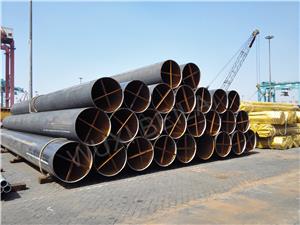
Energy pipelines span deserts, offshore platforms, permafrost zones, and urban corridors. Each environment places different demands on the pipe body and weld seams. For upstream and midstream projects, api line pipe for oil and gas supports crude oil, condensate, and multiphase flow under fluctuating pressure.
In gas networks, line pipe for natural gas transmission carries dry or wet gas across hundreds of kilometers, often under high internal pressure and strict safety standards. Offshore projects rely heavily on corrosion resistant line pipe, where seawater exposure and external coatings must work together to prevent failure.
Pain Points Engineers Try to Eliminate
Most pipeline issues do not come from design theory. They come from corrosion, weld defects, and material mismatch. Standard steel pipe often fails early when it encounters sour service, moisture, or temperature cycling. This is why project teams specify corrosion resistant line pipe instead of relying solely on coatings.
Another challenge involves long-distance pressure stability. Inconsistent mechanical properties lead to uneven stress distribution. Engineers prefer api line pipe for oil and gas because controlled chemistry and mechanical testing reduce uncertainty. For gas operators, line pipe for natural gas transmission must maintain toughness at low temperatures while resisting crack propagation.
Selection Criteria That Matter in Practice
Material selection starts with the fluid, but it does not end there. Engineers assess pressure class, operating temperature, soil conditions, and expected service life. Api line pipe for oil and gas offers predictable yield strength and impact performance, which simplifies system design.
For gas pipelines, line pipe for natural gas transmission demands tight control over ovality and straightness. These factors directly affect welding efficiency and long-term integrity. When corrosion risk increases, engineers move toward corrosion resistant line pipe, supported by alloy adjustment or enhanced manufacturing control rather than relying on coatings alone.
At BEILAI, we focus on consistency across heat treatment, dimensional tolerance, and inspection, because pipeline reliability depends on repeatability.
Parameter Recommendations from Field Experience
Wall thickness selection should balance pressure requirements and installation conditions. Excess thickness increases cost and welding time, while insufficient thickness limits service life. For api line pipe for oil and gas, designers often prioritize strength-to-weight efficiency.
Chemical composition matters more than many buyers expect. Line pipe for natural gas transmission requires stable carbon equivalent values to ensure weldability on-site. For aggressive environments, corrosion resistant line pipe benefits from optimized alloy content rather than post-production fixes.
Dimensional accuracy also affects project timelines. Pipes with consistent OD and straightness reduce alignment time during construction.
Questions Buyers Usually Ask
Is all API pipe the same?
No. Api line pipe for oil and gas varies significantly by manufacturing control and testing depth.
Why invest in corrosion resistance early?
Because corrosion resistant line pipe lowers inspection and replacement costs later.
Does gas service require special pipe?
Yes. Line pipe for natural gas transmission must meet stricter toughness requirements.
How important is inspection?
Critical. Reliable api line pipe for oil and gas depends on full traceability.
Common Mistakes Seen in Pipeline Projects
One frequent mistake involves selecting pipe based only on price. Low-cost materials often lack the consistency required for line pipe for natural gas transmission, increasing welding defects. Another issue involves assuming coatings solve all problems. Without proper base material, coatings cannot compensate for poor steel quality, especially in corrosion resistant line pipe applications.
Improper handling also causes damage before installation. Even high-quality api line pipe for oil and gas suffers when storage and transportation receive little attention.
Conclusion
Line pipe performance reflects decisions made long before commissioning. Api line pipe for oil and gas provides structural reliability, line pipe for natural gas transmission ensures pressure stability over long distances, and corrosion resistant line pipe protects assets where environments accelerate degradation. At BEILAI, we combine controlled manufacturing, strict inspection, and practical pipeline experience to support projects that prioritize long-term operation over short-term savings.