Why Some Projects with Finned Tubes Deliver Less Heat Than Expected
Why Some Projects with Finned Tubes Deliver Less Heat Than Expected
Introduction
When talking about thermal efficiency, many people only consider the heat exchanger. But it is the performance of a finned tube that often influences the heat transfer the most, even though it's not usually expected. Even though a finned tube is a very simple product, specification decisions as small as these can have an impact on heat transfer and operating costs for years to come.
Where Finned Tubes Are Commonly Used
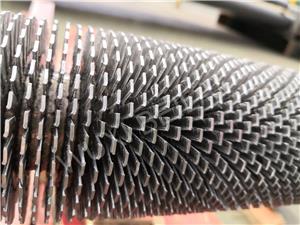
Around the world, a finned tube is used in a number of industrial equipment such as air coolers, boilers, economizers, waste heat recovery units and process heaters, all of which use finned tubes to maximize heat transfer area without a big increase in equipment size.
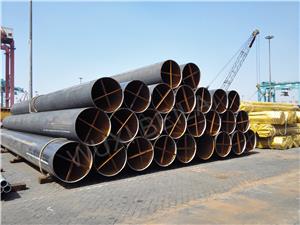
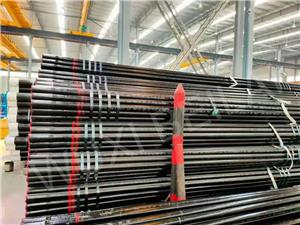
For most industrial uses, carbon steel finned pipes are still the preferred choice for many operators mainly because it is the most economical when the word "performance" is thrown in. On the other hand, stainless steel finned pipes will often be the main choice in chemical plants, marine facilities and projects near the coast because of their excellent corrosion resistance.
Problems Often Start Before Equipment Goes Online
One thing that we constantly see is that some buyers think that any finned tubewill give the same performance no matter where it is used.
However, usually things are not as simple as that.
This means for instance that, the finned tube in a clean processing plant may perform adequately almost without maintenance for years. The same type, however, could work very differently in a dusty place where the dirt particles get stuck in the fin gaps.
Changes in material also cause similar problems. Some facilities select carbon steel finned pipes just because the initial price is attractive. Downtime due to corrosion is a fact that will be faced later on. On some other projects, engineers prescribe stainless steel finned pipes for environments that do not actually require that level of protection.
Looking Beyond Tube Price
When engineers look at a finned tube, the price of the tube itself is just one side of the story.
Operating conditions together with maintenance, and expected life of the product, often influence the cost in the long run more than anything else.
Successful projects most of the time use carbon steel finned pipes because they can perform quite well in the environment. Suitable coatings and occasional maintenance help carbon steel finned pipes keep production on the level they are used to.
stainless steel finned pipe tend to be cost justified in more aggressive surroundings. It is common for operators to find out that stainless steel finned pipes are not only cheaper in terms of downtime but also lower in terms of replacement costs for the entire lifetime of the equipment.
Why Heat Transfer Efficiency Sometimes Falls Short
Heat transfer by finned tube is actually a result of a combination of factors. Fin spacing, airflow, temperature of operation and surface cleanliness all affect finned tube heat transfer performance.
In one case, the fins were so closely spaced that they actually impeded the airflow. When looking at the drawings, the heat transfer surface area was quite impressive. However, when running the installation, the finned tube transfer performance didn't meet the expectations.
In most cases, a good design aims for balance rather than going for the extremes.
This is the reason why professional manufacturers consider airflow resistance and finned tube heat transfer requirements at the same time during the development of products.
Mistakes That Create Unnecessary Costs
One of the common maintenance problems is failure to keep up with cleaning schedules.
Almost imperceptibly, a finned tube will be coated with dust, oil and other residues from the process. Because of that, the finned pipe heat transfer efficiency will decrease over time.
The importance of material selection should not be overlooked such that it is done without taking the actual environment at work into consideration. Widespread neglect of corrosive areas has led to facilities installing carbon steel finned pipes in such environments. And the converse is true for stainless steel finned pipes being bought for standard industrial environments where the cost is unjustified.
Each case adds to the cost of doing business for different reasons.
FAQ
Are carbon steel finned pipes still widely used?
Yes. carbon steel finned pipes continue to be a popular choice in industrial heat transfer because they represent good value for money and provide stable performance.
When are stainless steel finned pipes worth the extra investment?
stainless steel finned pipes make sense as a decision only when the operator is able to correlate the cost with the benefits brought by the increased corrosion resistance, i.e. longer service life and fewer maintenance requirements.
What affects finned tube heat transfer the most?
In addition to the operating temperature, factors like cleanliness, airflow conditions and appropriate fin spacing are among those that can have a major impact on finned tube heat transfer.
Conclusion
Heat transfer projects that incorporate finned tube for maximum efficiency are the result of multiple factors including material selection, maintenance planning, quality of manufacturing and operating conditions.
So far in our work at BEILAI, we have found that the best results occur when customers fit the finned tube design to the real working environment instead of focusing only on the purchase cost. Efficiency is improved while lifecycle costs are kept at a minimum in general when either carbon steel finned pipes or stainless steel finned pipes are stipulated.