How to Choose the Right Low Temperature Carbon Steel Pipe
How to Choose the Right Low Temperature Carbon Steel Pipe
Low-temperature piping needs more than adequate strength. When temperature drops, steel can lose ductility and become more vulnerable to brittle fracture. For engineers, selecting the right low temperature carbon steel pipe means matching material grade, impact-test requirements, pressure, dimensions, welding conditions, and service temperature.
For LNG, natural gas, refrigeration, and other cold-service systems, the safest approach is to select the pipe according to the complete operating condition rather than choosing by nominal size or price alone.
What Counts as Low-Temperature Service?
Low-temperature service generally refers to applications where operating temperatures can significantly reduce the toughness of conventional carbon steel.
A low temperature carbon steel pipe for cryogenic applications needs suitable mechanical properties at the actual minimum design temperature. Engineers should consider normal operating temperature, minimum design temperature, startup and shutdown conditions, and possible temperature excursions.
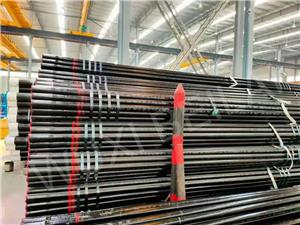
ASTM A333/A333M provides requirements for seamless and welded carbon and alloy steel pipe intended for low-temperature service and other applications requiring notch toughness. BEILAI offers ASTM A333 low-temperature pipe in multiple grades for these applications.
The first question for a low temperature carbon steel pipe for LNG applications should therefore be simple: What is the lowest temperature the pipe will actually experience?
Match Material Grade to Temperature
Material selection should start with temperature, not pressure.
Different ASTM A333 grades have different impact-test temperature requirements. As temperature decreases, engineers need stronger evidence that the selected steel can maintain adequate toughness.
A low temperature carbon steel pipe for cryogenic applications should therefore come with appropriate impact-test data for the specified service condition.
This is also why tensile strength alone cannot determine suitability. A pipe may show acceptable yield and tensile strength while still having inadequate notch toughness at low temperature.
For a low temperature carbon steel pipe for natural gas systems, engineers should compare the material grade, minimum design temperature, and required impact-test temperature before approving the specification.
Consider Pressure Together With Temperature
Temperature is only one part of the selection process.
Internal pressure determines the required wall thickness and influences the overall mechanical demands placed on the pipe. Engineers need to consider design pressure, operating pressure, temperature, corrosion allowance, and applicable design code together.
A low temperature carbon steel pipe for cryogenic applications must provide adequate toughness while also meeting the project's pressure requirements.
For high-pressure systems, increasing wall thickness may improve pressure capacity, but engineers should not treat thicker pipe as a substitute for correct material selection.
A properly specified low temperature carbon steel pipe for LNG applications balances pressure requirements with the material's low-temperature performance.
Diameter and Wall Thickness Matter
Pipe diameter affects flow capacity, pressure drop, equipment connections, and installation requirements. Wall thickness affects pressure resistance, structural stability, weight, and fabrication cost.
For this reason, engineers should select a low temperature carbon steel pipe for natural gas systems according to the complete piping design rather than selecting diameter and thickness independently.
A larger diameter may reduce pressure loss but increase material and installation costs. Excessive wall thickness can increase weight and welding work without providing a meaningful engineering benefit.
The right low temperature carbon steel pipe for LNG applications should therefore match both hydraulic requirements and mechanical design conditions.
Welding Performance Cannot Be Ignored
Many low-temperature piping systems rely on welded connections. The pipe may have suitable base-metal properties, but poor welding practice can introduce defects or reduce local toughness.
A low temperature carbon steel pipe for cryogenic applications should therefore be evaluated together with welding procedures, joint design, filler materials, preheating requirements, and post-weld inspection.
Engineers should also consider how the heat-affected zone behaves under low-temperature service.
For a low temperature carbon steel pipe for natural gas systems, welding documentation and qualification records can provide useful evidence that the material and fabrication process work together.
Impact Toughness Is a Key Selection Factor
Impact toughness deserves special attention in cold-service applications.
Charpy V-notch testing measures how much energy a specimen absorbs during impact at a specified temperature. The test helps engineers evaluate the material's resistance to brittle fracture.
For a low temperature carbon steel pipe for cryogenic applications, the specified impact-test temperature should relate directly to the project's minimum design temperature.
This is one reason engineers should not select pipe based only on tensile strength and yield strength.
BEILAI's ASTM A333 product information provides different grades and corresponding low-temperature impact-test requirements, allowing buyers to compare grades according to actual service conditions.
Match the Pipe to the Application
Different cold-service projects create different engineering priorities.
LNG systems often require careful control of temperature, toughness, pressure, and welding quality. A low temperature carbon steel pipe for LNG applications should match the project's minimum design temperature and applicable material requirements.
Natural gas systems may operate across a wider temperature range. A low temperature carbon steel pipe for natural gas systems should account for pressure fluctuations, ambient temperature, installation conditions, and potential low-temperature exposure.
Refrigeration and cold-service systems may require repeated temperature cycling. Engineers should consider thermal expansion, contraction, fatigue, and connection integrity rather than focusing only on minimum temperature.
The correct low temperature carbon steel pipe for cryogenic applications depends on the complete operating envelope.
Common Selection Mistakes
Several mistakes appear repeatedly in low-temperature piping projects.
Choosing by pressure rating alone: adequate pressure strength does not guarantee low-temperature toughness.
Ignoring impact-test temperature: the material grade must suit the actual minimum design temperature.
Using one grade for every application: LNG, natural gas, and refrigeration systems may have different requirements.
Overlooking welding: joint performance can become critical when the system operates at very low temperatures.
Selecting excessive wall thickness: more steel does not automatically mean better low-temperature performance.
How BEILAI Supports Low-Temperature Pipe Selection
BEILAI supplies ASTM A333 low-temperature pipe for applications requiring controlled low-temperature mechanical performance. The product range includes multiple grades, allowing engineers to select according to temperature and project requirements.
For buyers evaluating a low temperature carbon steel pipe for cryogenic applications, the key is to connect the material grade with impact testing, dimensions, pressure requirements, welding conditions, and actual service temperature.
BEILAI's ASTM A333 low-temperature pipe product information can be reviewed here: ASTM A333 Low Temperature Pipe.
Engineering Selection Checklist
Before approving a low temperature carbon steel pipe, engineers should confirm:
Minimum and normal operating temperature
Design pressure
Pipe diameter and wall thickness
Material grade
Charpy impact-test temperature
Required impact energy
Welding requirements
Applicable standards
Inspection and documentation requirements
Actual service medium
A low temperature carbon steel pipe for LNG applications should meet the complete project specification rather than one isolated parameter. The same principle applies to a low temperature carbon steel pipe for natural gas systems and other cold-service applications.
Final Engineering View
Choosing the right low temperature carbon steel pipe starts with understanding the actual service environment.
For low temperature carbon steel pipe for cryogenic applications, temperature and impact toughness must remain central to the decision. For low temperature carbon steel pipe for LNG applications, pressure, dimensions, welding, and low-temperature performance must work together. For low temperature carbon steel pipe for natural gas systems, engineers should also consider operating fluctuations and installation conditions.
The best selection is not necessarily the strongest or thickest pipe. It is the pipe whose material, dimensions, toughness, and manufacturing quality match the real conditions of the system.