How Tubing and Casing Are Inspected Before Delivery
How Tubing and Casing Are Inspected Before Delivery
Before oilfield tubing casing is shipped, buyers need to confirm more than the steel grade. Dimensions, surface condition, NDT, threads, internal clearance, traceability, and inspection documents all affect whether the products are ready for field use.
A structured tubing casing inspection before shipment helps manufacturers identify problems before the products leave the factory. For API 5CT and ISO 11960 products, the inspection scope depends on the grade, size, connection, service environment, and purchase specification.
What Is Checked Before Delivery?
A typical tubing casing inspection before shipment covers both the pipe body and connection.
The main checks include:
Chemical composition and mechanical properties
Outside diameter and wall thickness
Length, weight, and straightness
Surface condition
Nondestructive testing
Thread and coupling condition
Drift diameter where specified
Hydrostatic testing where required
Marking and traceability
Quality documentation
For tubing casing, API 5CT and ISO 11960 are widely used specifications. BEILAI also supplies thermal recovery pipe, CO₂ corrosion-resistant tubing and casing, sour-service products, and high-collapse casing for specialized oil and gas applications.
How Are Dimensions Inspected?
Dimensional accuracy is a key part of tubing casing dimensional quality inspection.
Inspectors measure outside diameter, wall thickness, length, and other specified dimensions against the purchase order. Wall thickness receives particular attention because excessive variation can affect pressure performance and dimensional consistency.
A complete tubing casing dimensional quality inspection may include:
Outside diameter measurement
Wall thickness measurement
Length measurement
Straightness checking
End-dimension checking
Weight or mass verification
Internal diameter checks where required
For large tubing casing orders, inspection records should provide traceability to the relevant pipe or heat number. This allows buyers to connect individual products with their test results.
A proper tubing casing dimensional quality inspection also helps identify dimensional deviations before packing, when corrective action is still easier.
Why Are Surface and NDT Checks Important?
Dimensional measurements cannot identify every surface or internal defect.
During tubing casing inspection before shipment, inspectors visually examine the pipe body and ends for cracks, seams, laps, scratches, gouges, corrosion, and damaged ends.
Nondestructive testing provides another level of control. Depending on the specification and product requirements, inspection may involve ultrasonic testing, electromagnetic or flux leakage testing, eddy current testing, or magnetic particle inspection.
A complete tubing casing inspection before shipment combines visual inspection with the appropriate NDT method rather than relying on appearance alone.
For specialized tubing casing, inspection should also reflect the intended service. Sour-service and corrosion-resistant products require attention to the applicable material and service requirements.
How Are Threads and Connections Checked?
The connection is a critical part of tubing casing because individual pipe sections must connect correctly during installation.
Before delivery, inspectors can check thread profile, diameter, pitch, gauge results, surface condition, pin and box condition, and coupling dimensions according to the specified connection.
During tubing casing inspection before shipment, inspectors should look for:
Damaged thread crests
Dents and burrs
Corrosion
Contamination
Machining defects
Coupling damage
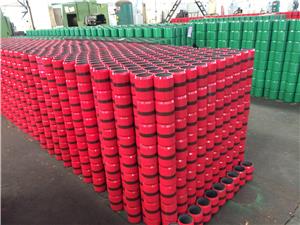
Missing thread protection
Thread protection is important after inspection because properly machined threads can still be damaged during transportation if the pipe ends are not adequately protected.
How Is Internal Clearance Verified?
Drift testing checks whether the internal passage of tubing casing meets the specified clearance requirement.
This can be important when downhole tools, completion equipment, or other components need to pass through the pipe.
As part of tubing casing dimensional quality inspection, buyers should confirm whether drift testing is required by the applicable specification or purchase order and whether the results are documented.
For projects where internal clearance is critical, this check can provide additional assurance before the tubing casing leaves the factory.
What Documents Should Buyers Review?
Physical inspection is only part of final release. Documentation must also match the actual shipment.
A final tubing casing inspection before shipment should verify:
Product type and grade
Applicable standard
Size and wall thickness
Quantity and length
Heat-number traceability
Chemical and mechanical test results
NDT records
Dimensional inspection records
Thread inspection records
Hydrostatic test records where required
Product markings
Packing information
The pipe markings, certificates, inspection reports, and shipping tally should remain consistent.
This makes tubing casing inspection before shipment more than a simple factory check. It creates a traceable quality record that buyers can review before accepting the cargo.
How Does BEILAI Support Tubing Casing Quality?
BEILAI supplies tubing casing for conventional and demanding oil and gas applications. Its range includes API 5CT and ISO 11960 products, thermal recovery pipe, CO₂ corrosion-resistant tubing and casing, sour-service tubing and casing, high-collapse sour-service casing, and ISO 13680 products.
For these products, tubing casing dimensional quality inspection should match the specified size, grade, and service requirements.
The same principle applies to connection inspection. A tubing casing inspection before shipment should follow the specified thread and coupling configuration rather than using one generic inspection method for every product.
What Should Be Confirmed Before Shipment?
The final tubing casing inspection before shipment should connect material verification, dimensional control, pipe-body inspection, and connection inspection.
A practical release checklist includes:
Dimensions meet the purchase specification
Surface condition is acceptable
Required NDT is complete
Material documents are available
Threads and couplings meet requirements
Drift testing is completed when required
Markings are correct
Traceability is maintained
Thread protectors and packing are suitable
Tubing casing dimensional quality inspection confirms the physical dimensions, while NDT and visual inspection help verify pipe-body condition. Connection checks and documentation complete the quality review.
For oil and gas projects, a documented tubing casing inspection before shipment gives buyers a clearer basis for shipment acceptance and reduces the risk of dimensional, connection, or documentation problems being discovered after delivery.