Poor Extruded Fin Tube Quality? How Extruded Fin Tube Manufacturing Quality Affects Heat Exchanger Performance
Poor Extruded Fin Tube Quality? How Extruded Fin Tube Manufacturing Quality Affects Heat Exchanger Performance
Modern industrial heat exchange systems are usually engineered so that there is more focus on equipment design, the way of operation and the efficiency of energy. However, the performance of the heat exchanger is also highly dependent on quality of its key parts. One of the most important heat transfer elements Extruded Fin Tubes directly has an impact on thermal efficiency, equipment reliability, and long-term operating costs.
A Extruded Fin Tube is an excellent example for demonstrating the influence of different parameters on heat exchanger efficiency. The selection of suitable Extruded Fin Tube is not only checking the dimensions and specifications but also making decisions according to the production precision, quality of fin bonding, and consistency.
Choosing the right extruded fin tube heat transfer performance for different industries involves a thorough evaluation of working temperature, pressure, corrosion conditions and the expected service life.
Why Manufacturing Quality Matters in Heat Exchanger Performance
Heat exchanger works by the continuous physical contact of hot and cold fluids. Any weakness in the heat transfer route can diminish the overall efficiency.
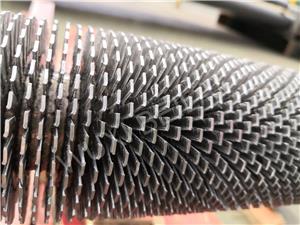
A high quality Extruded Fin Tube improves heat exchange through the provision of a sound mechanical connection between the fin layer and the base tube. This configuration not only minimizes thermal resistance but also facilitates a smooth and rapid transfer of heat from the tube surface to the fins.
However, two tubes of the identical specifications may present a different kind of result after operating the equipment. Ineffective extrusion of the fin tube, uneven contact between the fin and the tube, or a deviation in the dimensions will only lower the extruded fin tube heat transfer performance and raise the energy consumption of the unit.
Therefore, an engineer selecting an extruded fin tube for heat exchanger application should take into account the manufacturing competence as this factor is much more important than just the price of the products.
Fin Bonding Quality Determines Heat Transfer Efficiency
Tubular and fin connection represent the main reason of the heat flow limitation.
In the extrusion process, an outer aluminum layer forms a tight connection with the base tube. This construction allows excellent thermal contact between them, which is an obvious prerequisite for a stable heat transfer path.
If manufacturers can ensure constant extrusion pressure and control of dimensionality, then Extruded Fin Tubes will not only give good thermal performance but also have a significantly long service life.
Otherwise, poor quality production processes can create gaps between the fin and the tube surface. As these micro-defects increase thermal resistance they reduce the extruded fin tube heat transfer performance directly.
From these considerations, for engineers, selecting extruded fin tube for heat exchanger applications, the bonding quality between tube and fins is regarded as a key parameter for determining the reliability of the product.
Material Selection Influences Long-Term Performance
Diversified operating environments impose various demands on heat exchangers components.
Persistent operation, changing temperature, corrosive and humid atmospheres can all reduce the performance of the tubes. A well balanced Extruded Fin Tube with the right combination of base material and finish material will have excellent performance in its entire lifecycle.
The decision makers should make a detailed analysis and consideration of different factors before they choose a material for heat exchangers:
· Temperature range of operation
· Heat transfer demands
· Corrosion environment
· Mechanical load
· Maintenance requirements
Choosing the right combination of materials will help in the continuation of extruded fin tube heat transfer performance in a very long time.
In highly demanding extruded fin tube for heat exchanger applications failure can occur in the heat transfer system leading to reduced operating efficiency, plant shutdown or high maintenance.
Manufacturing Accuracy Affects Equipment Life
Heat exchangers are used in many industrial applications around the clock for several thousand hours. Small defects or problems in production might slowly turn into big issues.
An inconsiderate change in fin dimension, poor surface quality or inconsistent production process can be the reasons that heat transfer efficiency can be affected, which also leads to the reduction of the equipment life span.
Reputable Extruded Fin Tube manufacturers have strict quality management systems that are not limited to controlling extrusion and welding process but also material inspection, dimensional measurement, and final quality control.
Such controls help guarantee a steady extruded fin tube heat transfer performance over time.
Making right supplier choice with sufficient production experience is the first step for industry users when it comes time to purchase extruded fin tube for heat exchanger applications。
Common Applications Require Different Performance Requirements
Depending on the industry sector, heat exchange components may undergo various performance assessments.
The heat exchangers in the power industry need to operate continuously and reliably at extremely high temperatures.
For chemical processing facilities, it's usually the chemical and mechanical stability along with resistance to corroding conditions that are taken into consideration as the key requirements.
As for heating, ventilation, and air conditioning (HVAC) and cooling systems, the compact design and high speed of heat transmission typically become the most valued features.
Due to these reasons, a proper selection of an Extruded Fin Tube according to the operating conditions is a must-do for mechanical and chemical engineers, among others.
A well-developed understanding and knowledge of extruded fin tube for heat exchanger applications will enable a engineer to make the right decision when choosing components.
At the same time, knowing how one can measure or evaluate extruded fin tube heat transfer performance provides a more accurate estimation of a running or a newly proposed heat exchanger system's operating efficiency.
How Engineers Evaluate a Reliable Manufacturer
It goes without saying that a reputable supplier will produce the best Extruded Fin Tube possible.
Engineers are therefore advised to do more than just comparing a few product specs when they're looking to get their next heat exchanger parts supplies from whom ever.
Vital things to consider during supplier assessment are the following:
· Production history
· Reproducibility in a product
· Fineness of detail and accuracy of dimensions
· Quality of material supply,
· Control over quality of production,
· Customization abilities.
Manufacturers, especially, with strong production capabilities, will provide more consistent products and offer excellent support for projects that are complex in nature.
For decades, BEILAI has been manufacturing with great attention to detail and strict quality management so that every Extruded Fin Tube product meets the requirements demanded in different industrial fields.
Thanks to the controlled production and detailed quality inspection, BEILAI is able to offer dependable extruded fin tube for heat exchanger applications solutions for a variety of industries.
Improving Heat Exchanger Efficiency Through Better Tube Selection
Multitude of factors influence the performance of heat exchanger, but high quality components are still the main support for them.
High quality Extruded Fin Tube manufactured well not only improves the heat transfer, but also lowers energy consumption and, in the process, can support the longer usage of a heat exchanger.
To an engineer, the assessment of a combination Manufactured Fin Tubes Heat Transfer Properties and Manufacturing Quality is a reliable method for making choices with regard to a new heat exchanger.
Demanding to increase energy efficiency and cut down on operating expenses, industries will continue to find extruded fin tube for heat exchanger applications,a key feature for modern thermal systems.
Conclusion
Production quality has a decisive role in the efficiency and reliability of heat exchangers.
In particular, factors such as the bonding of the fin, the material choice, the precision of fabrication, and the supervision of inspection play a role in the overall performance of the Extruded Fin Tube.
With extruded fin tube heat transfer performance and suitable extruded fin tube for heat exchanger applications on the market for reliable products, the work of engineers can lead to higher system efficiencies, reduced maintenance requirements, and realization of long-term operational objectives at a lower cost.