What Is Thermal Recovery Pipe? Applications in Heavy Oil and Steam Injection Wells
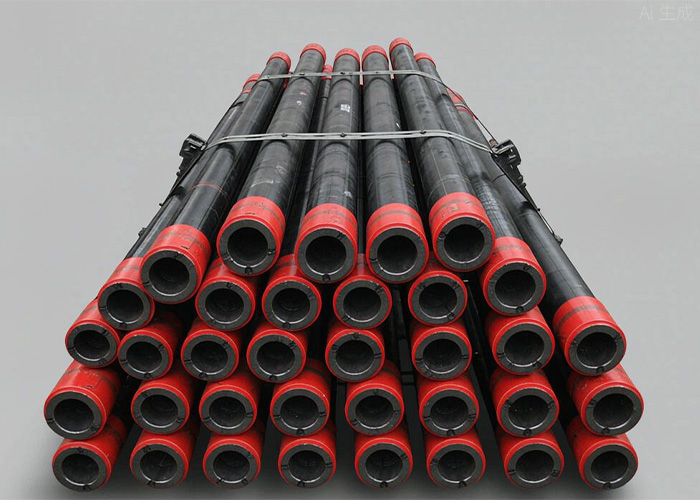
What Is Thermal Recovery Pipe? Applications in Heavy Oil and Steam Injection Wells
Heavy oil is difficult to produce because its high viscosity limits fluid flow through the reservoir. Thermal recovery solves this problem by introducing heat, most commonly through steam injection, to reduce oil viscosity and improve mobility.
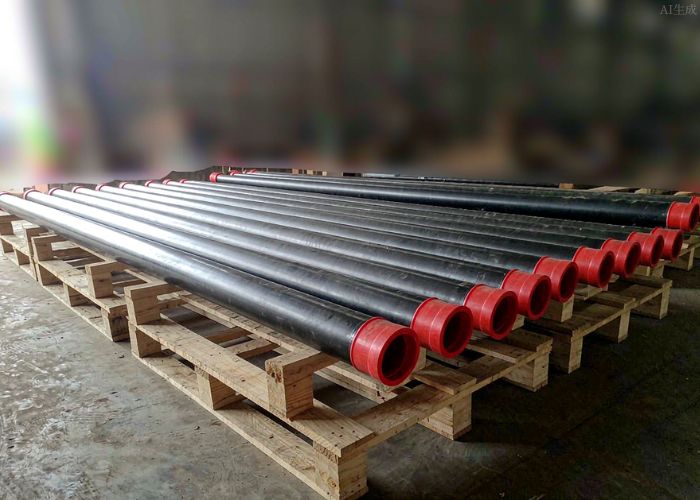
A Thermal Recovery Pipe is an oilfield tubular designed for the demanding conditions created by these thermal recovery methods. It provides a controlled flow path for hot injection fluids while dealing with elevated temperature, pressure, thermal expansion and repeated heating cycles.
Unlike conventional tubing, thermal-service tubing must be evaluated beyond room-temperature strength. The actual well conditions can affect:
Tubing temperature
Injection pressure
Steam quality
Heat loss
Axial stress
Thermal expansion
Connection integrity
Long-term material performance
This makes pipe selection an important part of the overall completion design rather than simply a purchasing decision.
How Does Thermal Recovery Pipe Work in Heavy Oil Wells?
The basic question is simple: how does thermal recovery tubing help produce heavy oil?
Steam is generated at the surface and transported through the tubing into the reservoir. The heat transferred from the steam reduces heavy-oil viscosity, allowing the oil to move more easily toward the production well.
This approach is used in several thermal recovery methods, including:
Cyclic steam stimulation (CSS)
Steam flooding
Steam-assisted gravity drainage (SAGD)
Other steam-injection processes
The challenge is that the steam does not travel through an ideal, thermally isolated pipe.
As it moves downhole, heat transfers from the hot fluid to the surrounding formation. Pressure and temperature also change with depth. These changes can reduce steam quality before the fluid reaches the target zone.
Research has demonstrated the importance of this effect. One published field study examined a 764 m well, with 62.8% steam quality, an 18 t/h injection rate, and 12.35 MPa wellhead pressure.
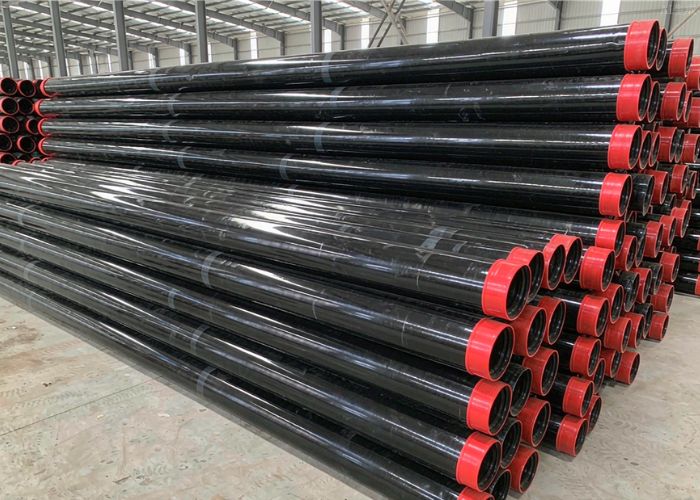
Another numerical study compared steam injection at 1.2 and 3.3 kg/s and found that insulated tubing could provide better thermal performance than conventional tubing.
This is why thermal recovery wells require more than a basic pressure calculation.
The tubing needs to maintain mechanical integrity while exposed to:
High operating temperature
Internal pressure
Thermal expansion
Repeated heating and cooling
Axial loading
Potential buckling
Long-term exposure to thermal stress
For EPC contractors and oilfield operators, the important point is that steam injection tubing is part of the thermal system. Its dimensions, material and connection design can affect both mechanical reliability and heat-management performance.
How Should You Select Thermal Recovery Pipe for Steam Injection?
The biggest procurement mistake is choosing a pipe based only on nominal size and API grade.
For an API 5CT thermal recovery pipe application, the specification should start with the actual operating envelope.
1. Define temperature
Determine:
Maximum injection temperature
Expected bottomhole temperature
Temperature changes during startup and shutdown
Frequency of thermal cycles
High temperature can affect material strength, creep behavior and dimensional stability.
2. Check pressure and load
The design should consider:
Injection pressure
Reservoir pressure
Internal pressure
Axial stress
Thermal expansion
Tubing-casing interaction
A stronger room-temperature grade is not automatically the best choice for high-temperature service.
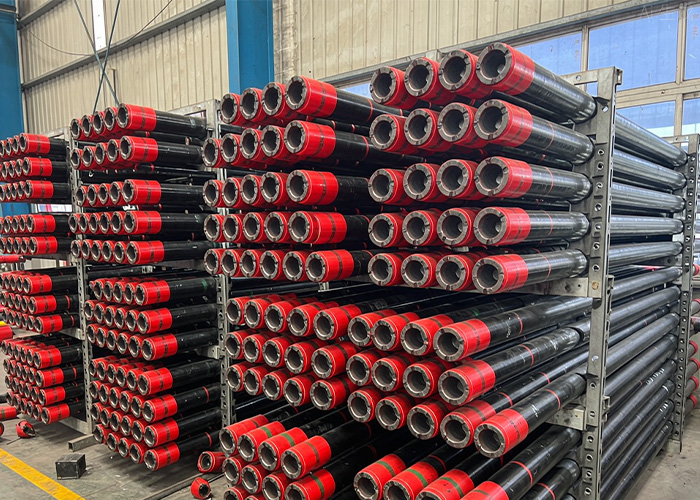
3. Select the appropriate material
API 5CT and ISO 11960 provide the foundation for steel casing and tubing requirements.
However, thermal recovery applications may require additional project-specific engineering data.
For example, buyers should verify:
Temperature-dependent mechanical properties
Creep behavior
Chemical compatibility
Connection performance
Dimensional requirements
Inspection and NDE requirements
API's current 5CT specification covers casing and tubing requirements, while ISO 11960 establishes technical delivery conditions for steel casing and tubing.
4. Consider heat loss
Steam quality at the surface is not necessarily the same as steam quality at the reservoir.
Well depth, tubing configuration, insulation and formation temperature all influence heat transfer.
For deeper wells, thermal modeling can therefore be valuable before finalizing the thermal recovery tubing specification.
5. Don't overlook connections
The connection experiences the same thermal cycles as the pipe body.
Thread design, sealing performance, thermal expansion and axial loading should be evaluated together.
A suitable Thermal Recovery Pipe is therefore not simply “high-temperature steel pipe.” It is a tubular selected around the complete operating conditions of the well.
Common mistakes
Using room-temperature strength as the main selection criterion
→ Better approach: check temperature-dependent mechanical and creep data.
Assuming API 5CT compliance automatically means suitability for every thermal application
→ Better approach: combine API/ISO requirements with project-specific thermal requirements.
Ignoring thermal expansion
→ Better approach: include temperature-driven axial movement and stress in completion calculations.
Looking only at wellhead steam quality
→ Better approach: consider expected heat loss and downhole steam conditions.
Buying before defining the complete well design
→ Better approach: establish temperature, pressure, depth, injection rate, dimensions and connection requirements first.
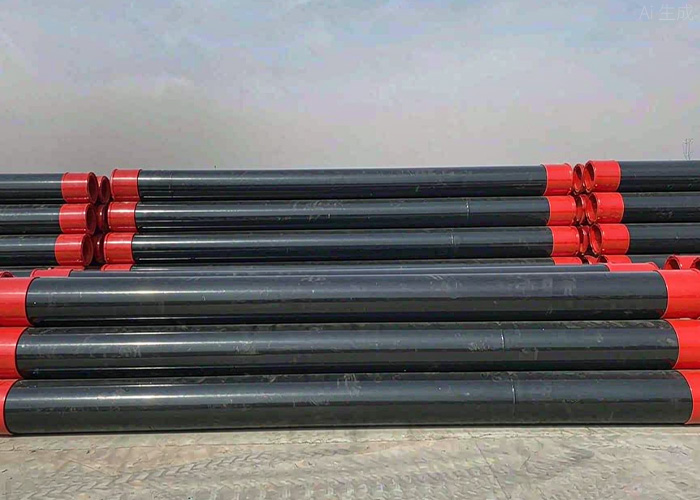
Thermal Recovery Pipe from BEILAI: Manufacturing and Quality Considerations
For buyers evaluating thermal recovery tubing, supplier capability is as important as the nominal product specification.
BEILAI manufactures seamless tubes for oil & gas, energy, chemical and industrial applications.
Its published product portfolio includes:
OCTG products
Casing and tubing
Boiler tubes
Heat-exchanger tubes
Vacuum-insulated tubes
Thermal recovery pipe
BEILAI's thermal recovery pipe series is designed for thermal recovery wells with a stated service range of 200–400°C. Its published product information also provides mechanical and creep-related data for selected thermal-recovery grades.
For an OEM or project procurement requirement, the important areas to verify include:
Factory capability
Seamless tube manufacturing, hot rolling, cold drawing and related processing capabilities support different dimensional and application requirements.
OEM requirements
Specifications can be evaluated according to:
Grade
OD
Wall thickness
Length
Connection
Temperature
Pressure
Inspection requirements
QC
For thermal applications, buyers should pay particular attention to:
Chemical composition
Mechanical properties
Dimensional inspection
NDE
Heat/lot traceability
Surface quality
Documentation
Certificates and standards
The applicable API/ISO edition and project specification should be confirmed before purchase.
Global projects
The same basic thermal-recovery concept can involve very different well depths, temperatures, pressures and completion configurations. Supplier evaluation should therefore focus on technical fit rather than simply comparing unit prices.
For a project requiring an API 5CT thermal recovery pipe, providing the well temperature, pressure, pipe dimensions, grade, connection and applicable standard gives the manufacturer a much stronger basis for technical evaluation.
FAQ
What is Thermal Recovery Pipe?
A Thermal Recovery Pipe is an oilfield tubular used in high-temperature thermal recovery wells, particularly steam-injection applications. It transports hot injection fluids while handling elevated temperature, pressure and thermal cycling.
What is thermal recovery tubing used for?
Thermal recovery tubing is primarily used to transport steam or other hot fluids into heavy-oil reservoirs. It supports processes such as cyclic steam stimulation, steam flooding and SAGD.
What type of pipe is used for steam injection?
Steam injection tubing is generally selected from suitable oilfield casing and tubing specifications such as API 5CT or ISO 11960, with additional requirements determined by temperature, pressure and completion design.
How does heavy oil thermal recovery work?
Heavy oil thermal recovery uses heat to reduce oil viscosity and improve its mobility. Steam injection is one of the most widely used approaches for delivering thermal energy into heavy-oil reservoirs.
What temperature can thermal recovery tubing handle?
There is no universal temperature limit. It depends on the material, grade, wall thickness, connection and complete well design. BEILAI currently publishes a thermal recovery pipe series for 200–400°C service.
Conclusion
Thermal recovery depends on more than generating high-temperature steam. Heat loss, steam quality, pressure, thermal expansion and tubular performance all influence what happens between the wellhead and reservoir.
For that reason, selecting a Thermal Recovery Pipe should begin with the actual operating conditions of the well.
A well-defined specification makes it easier to select reliable thermal recovery tubing and avoid costly mismatches between the tubular and the actual thermal recovery system.